
Caring for Succulents
Cactus vs. Succulent
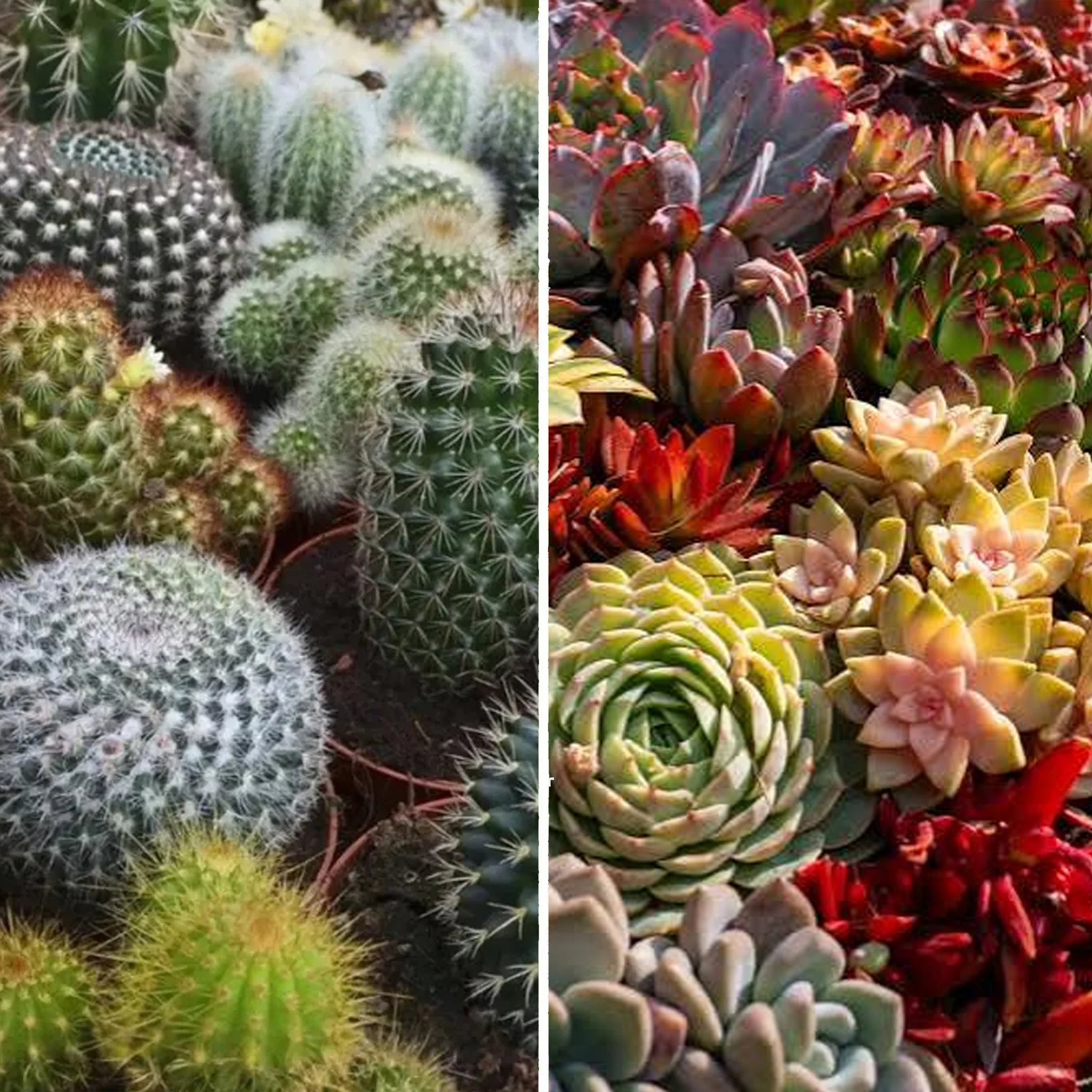
If you've ever wondered whether a plant is a cactus or a succulent, you're not alone! The good news is that it's actually pretty simple. Cacti are succulents, but not all succulents are cacti. The word succulent describes plants that are especially good at storing water. They may store water in their leaves, stems, or roots, which helps them survive hot, dry conditions. Aloe, agave, jade plants, echeverias, and many other familiar garden plants are succulents. Cacti are a special group of succulents that belong to the cactus family, Cactaceae. They are especially well adapted to dry environments and are famous for their spines, unusual shapes, and beautiful flowers.
So, How Can You Tell?
The easiest way to identify a cactus is to look for something called an areole. Areoles are small, cushion-like spots on the plant where spines, flowers, and new growth emerge. Areoles are unique to cacti. Not every cactus has big, obvious spines. Some have tiny spines, fine hairs, or almost no visible spines at all. That's why looking for areoles is more reliable than simply looking for prickles.
What About Agaves and Aloes?
Agaves and aloes are succulents, but they aren't cacti. They store water in their fleshy leaves rather than having the specialized structures found on cacti. This is one reason the word succulent can be confusing. It's a large group of plants with many different shapes, sizes, and growing habits.
The Simple Rule
Think of it this way:
Succulent = water-storing plant
Cactus = a type of succulent with areoles
Whether you choose a spiky cactus, a sculptural agave, or a colorful aloe, succulents are wonderful plants for creating beautiful, water-wise gardens. Many are surprisingly tough, require little water once established, and add year-round character to the landscape.

Succulent Care
Cacti and succulents are some of the easiest plants to grow once you understand what they need. They are naturally designed to handle dry conditions, store water, and make the most of bright sunlight. With a little care, these tough plants can thrive for years!
Give Them Plenty of Light
Most cacti and succulents love bright light. Outdoors, many enjoy full sun, although some succulents prefer a little afternoon shade, especially in very hot climates. If you're moving a plant into stronger sunlight, give it time to adjust. A sudden change from shade to intense sun can cause sunburn. Gradually increase the amount of sunlight over a week or two. Indoor plants should be placed near a bright, sunny window. If your plant becomes tall, stretched, or starts leaning toward the light, it may need more sun.
Don't Overwater
The biggest mistake people make with cacti and succulents is watering too often. These plants store water, so they don't need frequent watering. Instead of watering on a schedule, check the soil first. When the soil has dried out completely, water thoroughly and allow excess water to drain away. During cooler months or periods of dormancy, many cacti and succulents need much less water. When in doubt, wait a little longer. It's usually easier to save a thirsty succulent than an overwatered one.
Use Well-Draining Soil & Choose the Right Pot
Good drainage is essential. Cacti and succulents do not like sitting in wet soil. Choose a soil mix designed for cacti and succulents, or create your own by adding plenty of coarse, mineral material to improve drainage. Always use a container with drainage holes. A decorative planter without a drainage hole can look beautiful, but it can also trap water around the roots. Your planter should have a drainage hole and should not be dramatically larger than the plant's root system. A pot that is too large can hold moisture for too long. Terracotta pots are a popular choice because they are porous and allow moisture to evaporate through the sides.
Know Your Plant
Not all cacti and succulents have exactly the same needs. Some love intense desert sun, while others naturally grow beneath trees, among rocks, or in areas that receive more moisture. Before choosing a permanent spot, learn a little about your particular plant. Consider its light, temperature, soil, and watering needs. This is especially important in the Southwest, where summer temperatures and intense sunlight can be very different from conditions in other parts of the world.
Protect Them From Cold
Many cacti and succulents are surprisingly cold-hardy, but others are sensitive to freezing temperatures. If you live somewhere with winter freezes, know your plants' temperature tolerance. Cold-sensitive varieties may need to be moved indoors or protected during freezing weather.
Watch for Pests
Even tough plants can occasionally have pests. Watch for mealybugs, scale, spider mites, and other insects. Check around the stems, leaves, and hidden areas of the plant regularly. Catching a problem early makes it much easier to manage.
A Little Neglect Can Be a Good Thing
Cacti and succulents don't need constant attention. In fact, they often do best when you resist the urge to fuss over them. Give them the right light, excellent drainage, and water only when they need it, and let them do what they do best—grow! With the right conditions, these fascinating plants can bring texture, color, flowers, and a little desert beauty to your garden while helping you create a more water-wise landscape.